Every wholesale invoice is denominated in grams. Every salon invoice is denominated in strands, locs and chair hours. The conversion rate between those two units is the single most under-measured number in the braiding supply chain, and it is where a "cheap" supplier quietly loses you margin.
1. Why Net Weight Is Not the Same as Usable Yield
A 100g pack that weighs 100g on arrival can still deliver 88g of usable material. The difference is moisture regain, packing twine, elastic bands, and the short fibres that shed during pre-stretching. In humid climates the swing is larger, because afro-textured bulk is hygroscopic and will pick up atmospheric water between the workshop and your shelf.
This is why a buyer who compares suppliers on "price per 100g" is comparing an input unit against an output that nobody has measured. Two suppliers at the same headline price can differ by 15 percent on cost per finished loc.
2. The Three-Pack Weighing and Counting Protocol
Run this on every new lot before you reorder. It takes about 40 minutes and it replaces guesswork with a number you can put in a quote sheet.
Step 1 — Condition. Leave the unopened packs in the studio for 24 hours so all three reach the same ambient humidity as your work area. Weigh each pack on a 0.1g scale. Record against the stated net weight.
Step 2 — Strip the packaging. Remove twine, bands and inner bag, then reweigh. This is your gross-to-net correction and it is usually between 0.5g and 2g per pack.
Step 3 — Count a representative sample. From each pack, pull three 1g bundles at random (top, middle, bottom of the pack), count the individual strands in each, and average. That gives you strands per gram for the lot.
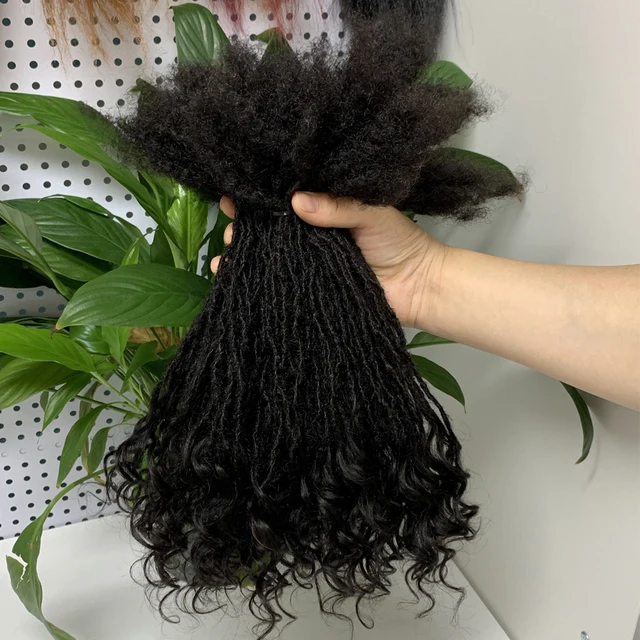
Step 4 — Rebuild a test loc. Using the factory-interlocked locs as your visual reference, build three locs to your standard diameter and length. Weigh the material consumed per loc. That is your grams-per-loc figure, and it is the one you should trust over any catalogue number.
3. Reading the Result
Once you have usable grams and grams-per-loc, the yield is simple division. What matters is the comparison across lots, not the absolute figure on day one. A lot that yields noticeably fewer finished locs than the previous lot at the same invoice price is a price increase, whether or not the supplier announces one.
Two practical thresholds we use when qualifying a new workshop: short-weight tolerance of plus or minus 3 percent on net weight, and a strand-count variance under 10 percent across the three sampled zones of the pack. If either fails, the lot goes back for re-sampling before it goes into a client installation.
4. What a Short Pack Costs You
Take a stylist who quotes a fixed price per installation and budgets a fixed number of packs per head. A pack that runs 6 percent light does not just shave 6 percent off the material — it often pushes the installation into an extra pack, and the whole margin on that chair is gone. Short weight is invisible on the invoice and visible only in the yield audit.
Build the audit into your intake routine once per lot, keep the numbers in a simple sheet, and you will start to see which supplier is actually cheapest per finished loc rather than cheapest per headline gram.
The Yield Audit Bench Kit
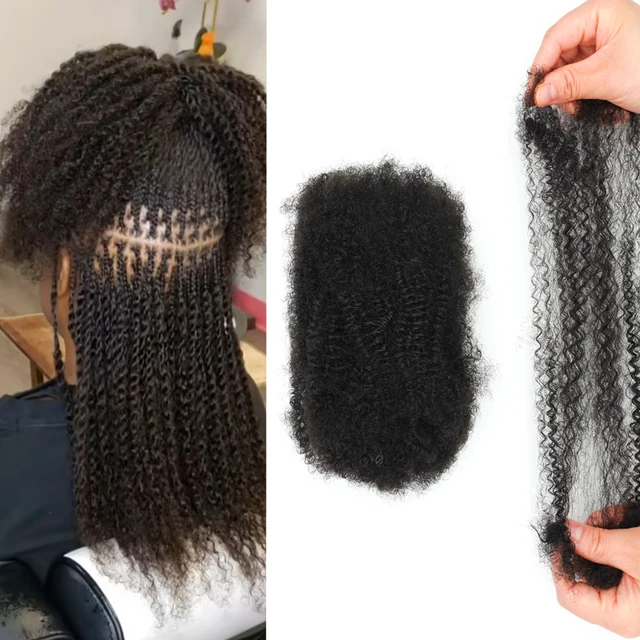
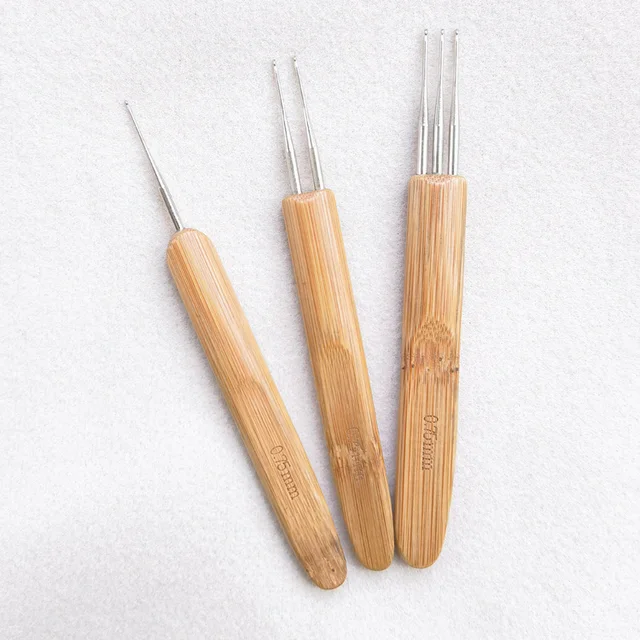
Pre-stretched afro kinky bulk for strand-count sampling, factory-interlocked locs as the finished reference, and the hook needle used to rebuild counted strands into test locs.