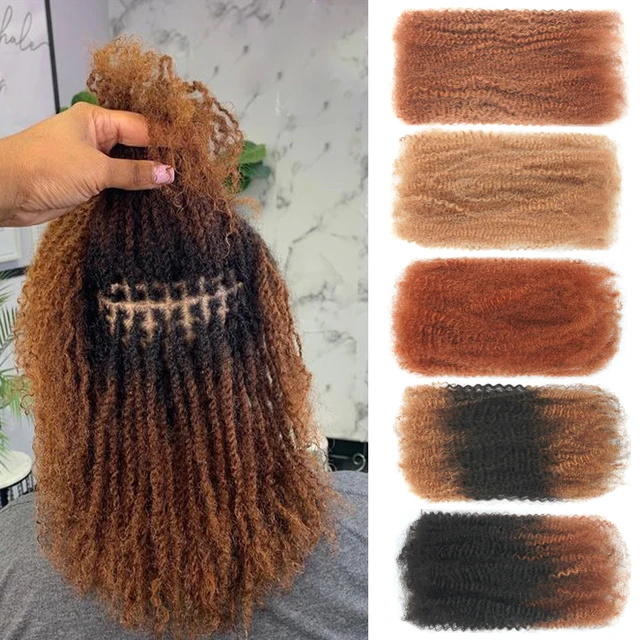
Bulk hair is one of the lightest cargoes in a freight container and one of the most expensive to move per kilo, and those two facts are the same fact. Freight does not bill you for how much your goods weigh. It bills you for the space they occupy, converted into a weight. A supplier who packs loose and a supplier who packs dense can quote the same unit price and deliver a fifteen percent difference in what the goods actually cost you on the floor.
1. Two Weights, One Invoice Line
Every shipment has an actual weight and a volumetric weight. The carrier charges whichever is greater, and that number is the chargeable weight.
- Actual (gross) weight: goods plus packaging, on a scale.
- Volumetric weight: carton length times width times height in centimetres, divided by a carrier divisor. Express and air conventions commonly use 5000 or 6000; sea LCL is priced per cubic metre instead.
- Chargeable weight: the higher of the two. This is what the invoice is built on.
The divisor is a carrier convention, not a constant of nature, so confirm which one applies to your lane before you model anything. What does not change is the structure: volume sets the bill whenever the cargo is light for its size, and hair almost always is.
2. A Worked Example
The figures below are illustrative inputs, not a quote for any lane. Substitute your own carton dimensions, gross weight and forwarder rate; the arithmetic is the point.
- Carton dimensions: 50 x 40 x 35 cm — 70,000 cubic centimetres.
- Volumetric weight at a 5000 divisor: 14.0 kg.
- Actual gross weight: 9.0 kg, of which roughly 0.6 kg is packaging.
- Chargeable weight: 14.0 kg, because volume wins.
Now the part that matters. Nine kilos gross is about 8.4 kg of net hair. If the freight on that carton is billed at the chargeable 14 kg rather than the actual 9 kg, every gram of hair is carrying freight it never incurred on the scale. Delivered cost per gram is the only figure that survives that distortion.
Delivered cost per gram equals goods cost plus freight plus duty and clearance, divided by net hair grams. Net, not gross, and net of packaging. Suppliers who quote per pack and pack heavy cartons are quietly moving cost into the freight line where it is harder to see.
3. Why the Same Freight Rate Produces Different Numbers
Three bulk formats behave completely differently in a carton, and the difference is what makes unit-price comparison unreliable.
| Format | Packing Behaviour | Effect on Chargeable Weight |
|---|---|---|
| Virgin bulk, vacuum compressed | Compresses hard, minimal trapped air, low packaging overhead. | Actual weight usually wins. The most freight-efficient form to ship. |
| Afro kinky bulk, loose pack | High loft, springs back after compression, needs larger cartons. | Volume frequently wins. Per-gram freight can rise sharply with carton size. |
| Pre-made locs and braided blends | Rigid structure resists compression, individual packs hold air. | Volume almost always wins. Ship these consolidated, not in small drops. |
This is why a loc extension line can look cheaper per strand at the factory and still cost more landed than a bulk-based service. The product is fine; the packing density is not.
4. The Levers That Actually Move It
- Ask for carton dimensions and gross weight before the goods ship. A supplier who cannot provide them has not packed the order yet, which means there is still time to change it.
- Request vacuum compression in writing and specify whether it is acceptable for the product. Compressed bulk recovers, but compressed pre-made locs can take a set that shows up in the install.
- Consolidate. Two half-cartons billed separately pay the volumetric penalty twice. One full carton pays it once.
- Watch the packaging weight. Heavy inner packaging is billed as goods and thrown away on arrival.
- Compare on delivered cost per gram, not unit price. Build the number before you place the order, and rebuild it when the invoice lands.
5. Fixing the Comparison Method
Pull your last three shipments and calculate delivered cost per gram for each. If the spread between two suppliers is wider than the spread in their quoted unit prices, your purchasing decision has been running on the wrong number. That is the whole audit: same formula, same definition of net grams, applied to every lane.
Then put two lines into the purchase order. One names the packing method and carton specification. The other requires gross weight and carton dimensions on the packing list, so the invoice can be checked against what was actually declared rather than accepted on trust.
6. What This Does to Your Pricing
Once freight is expressed per net gram, salon pricing stops being guesswork. A service built on compressed bulk has a different freight floor from one built on pre-made locs, and the difference belongs in the service price rather than in a shrinking margin discovered at month end. Model it once per product form, update it when your forwarder's rate changes, and the quote you give a salon in October still makes sense when the invoice arrives in December.
The Delivered-Cost Comparison Suite
Three bulk formats with very different packing densities, used to demonstrate how the same freight quote produces three different delivered costs per gram.