The question we get most often from salons moving into their own loc production is blunt: should we buy a machine or keep hand-interlocking? The honest answer is that it is an arithmetic question about volume, not a philosophical question about craft.
1. Separate the Two Cost Lines
Handmade production has almost no capex and a high, fully variable labour cost. Machine production shifts cost from labour into a fixed asset plus consumables. The mistake is comparing them on hourly wage alone, because that ignores utilisation: a machine sitting idle still costs you depreciation and floor space.
Build your model on three inputs you can actually measure in your own studio: minutes per 100 locs by hand, minutes per 100 locs on the machine, and your loaded labour rate (wage plus on-costs, not the headline hourly rate).
2. Run the Time Trial Before You Run the Numbers
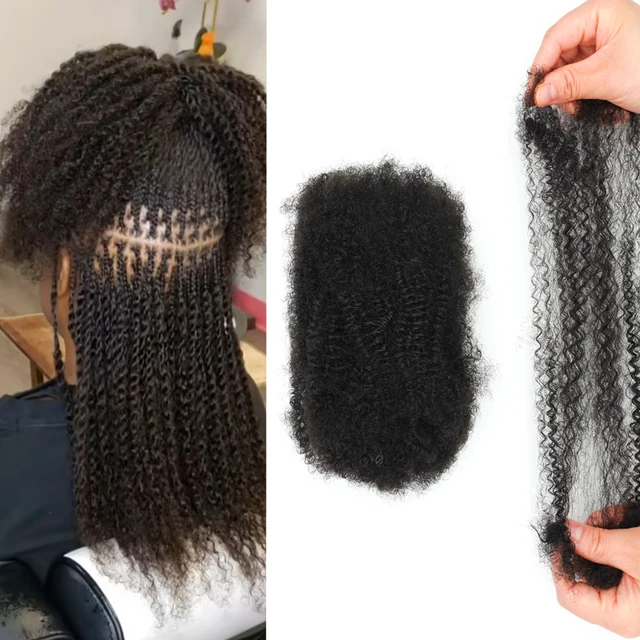
Do not take a supplier's throughput claim as your input. Take one 100g pack of pre-stretched bulk, produce 100 locs by hand, and time it end to end including trimming, sealing and inspection. Then produce 100 locs on the machine from the same lot, same target diameter, same operator if possible.
Record reject rate as well as time. A machine that is 40 percent faster but doubles rejects is not 40 percent faster — rejected locs consume material, and material is the second-largest line in your cost stack after labour.
3. Where Handmade Still Wins
Custom diameters, tapered ends for a specific client, short runs of a colour you do not stock, repair work on an existing set — these are all jobs where set-up time on a machine exceeds the run itself. If more than roughly a third of your production is bespoke, keep a hand station running and treat the machine as the volume line.
There is also a service-differentiation argument. Some locticians market hand-interlocked construction explicitly, and that positioning is worth more than the labour delta on a small book of business.
4. Utilisation Is the Real Risk
The failure mode we see is not a bad machine, it is a machine bought for peak season and left idle in the shoulder months. Before committing capex, check whether you have enough committed volume — classes, wholesale accounts, or a loc subscription base — to keep the machine running in a normal month, not just a good one.
If volume is seasonal, the arithmetic usually favours outsourcing peak production to a workshop and keeping handmade in-house for bespoke work, rather than owning the asset year-round.
The Loc Workshop Capex Kit
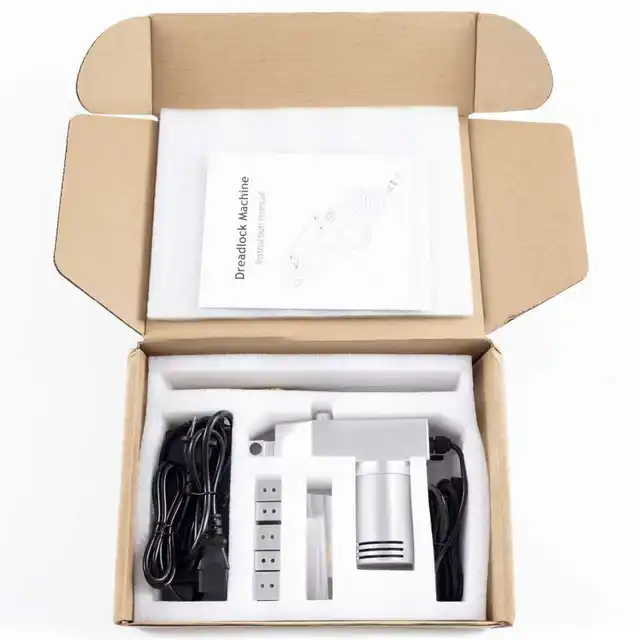
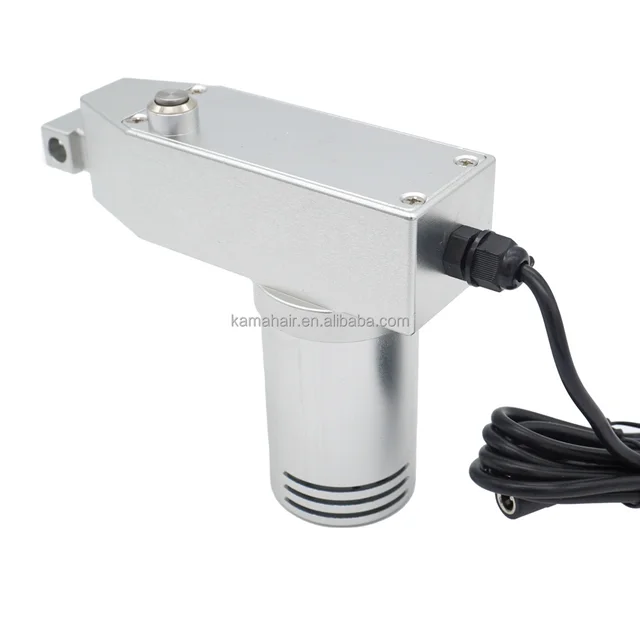
Two production machines at different price points plus pre-stretched bulk, so a workshop can time machine output against hand-interlocked output on the same input material.